How this started
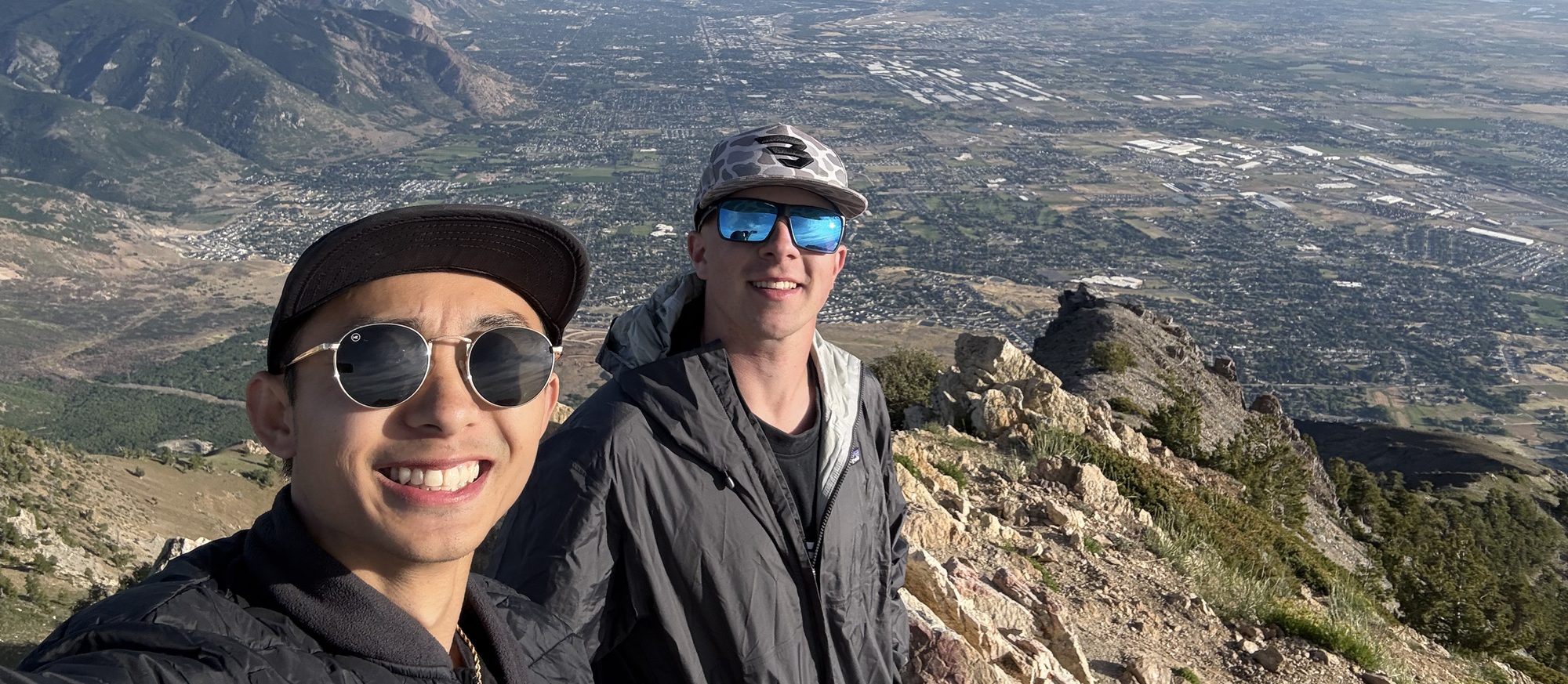
We met in the summer of 2026. Hays was in Utah for eight weeks; Adam lives in Ogden, at the foot of the Wasatch. Two weeks in, we climbed Ben Lomond together — the peak that closes off the north end of the valley.
We talked the entire way up and most of the way down. About what we were each good at and where we weren't. About our faith and how we're each trying to live it out. About the things we wanted to build and why we hadn't yet. Somewhere on that mountain it stopped being small talk.
A week later we got matching mountain tattoos.
We named the company after the mountain, because that is honestly where it started.
Both of us are relentless idea people. That is the thing we recognized in each other first — the same restlessness, the same habit of turning a problem over out loud until it becomes a plan. Eight weeks in person was enough to know we wanted to build things together for a long time.
Hays went home to Louisiana at the end of that summer, and we kept going anyway. Two thousand miles hasn't changed much: we still talk constantly, we still trade ideas at all hours, and we still split the work the same way we did on the trail. He'll be back in Utah eventually. Until then the company runs on a phone line and a shared conviction that this is worth doing.
What we're building
Lomond Co is a software company, not a single-product company. We expect to build a number of things over the years, in more than one category. What they'll have in common is the two of us and the way we work.
The first is HuntBNB, and we'll say plainly how it came about: we went looking for a real problem worth building a business around, and this one kept holding up under scrutiny.
Access to private land is the quiet bottleneck in hunting. Public ground gets more crowded every season, while a great deal of the best hunting in the country sits behind fences owned by people who are often open to letting someone on — they just have no practical way to find the right person, set terms, and be confident it will go well. Meanwhile those landowners hold an asset that produces nothing most of the year, and carry real concerns about liability, property damage, and who exactly is walking around out there.
Neither of us invented that problem and neither of us has a dramatic story about it. What we have is a hunter who grew up in it, someone on the business side who asks the obvious questions, and a shared read that the fence is a coordination problem rather than a permanent condition. That is what we're testing.